01The name

Composite, as in composite material.

Heterogeneous plies — carbon, glass, resin — bonded into a structure stronger than any constituent. That's the engineering idea this company is named after, and we mean it literally: frontier models are the plies. The arbitration layer is the resin.

PLY 01 · GPT PLY 02 · CLAUDE PLY 03 · GEMINI PLY 04 · YOURS · TUNED THE RESIN · ADVERSARIAL ARBITRATION advocate · defender · arbiter · evidence chain ONE SIGNED DECISION — STRONGER THAN ANY PLY

A single model is a single point of failure: one vendor, one bias, one black box. A composite argues with itself — one ply proposes, another attacks, the resin reconciles — and the result carries load no single layer could.

"Heterogeneous parts, bonded into something stronger than any constituent. That's how trust gets built."

We didn't learn that from a whitepaper.

02The origin

Three proving grounds,
one lesson each.

Proving ground 01 · Missile defense

Where a machine's call can end a life.

We started in multi-party adversarial decision systems for missile defense — engagement recommendations fused from radar, IR, and SIGINT, where the machine proposes and a human signs for the consequence. Long before "human-in-the-loop" was a slide, it was our acceptance criterion.
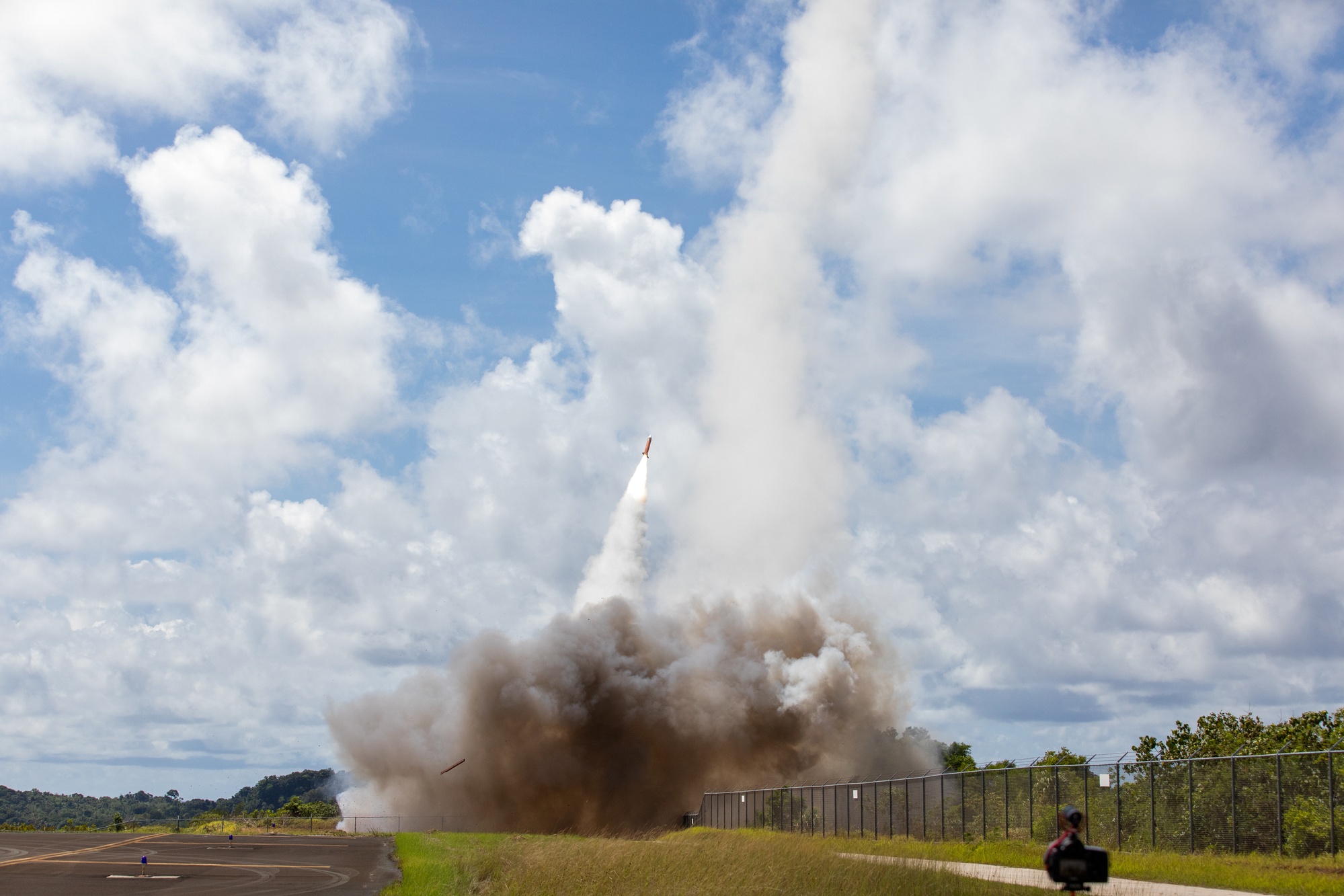
LESSON 01 — THE DECISION NEEDS A WITNESS.
PATRIOT interceptor launchU.S. ARMY · DVIDS
Proving ground 02 · Federal healthcare · in production since 2025

Battle-hardened at $250B a year.

The architecture went to production in the most adversarial multi-party decision environment in U.S. federal healthcare: 180 million claims a year, five parties with opposing incentives, every determination FOIA-survivable — at FedRAMP High. Glass-Box appeals outperform the industry baseline 72:38.

LESSON 02 — EVIDENCE IS THE PRODUCT.
Military medical team in an operating roomU.S. ARMY · DVIDS
Proving ground 03 · Defense & regulated enterprise · now

Generalized into the bridge.

Claims, fire control, grid operations — the loop is identical: signals in, an argument in the open, a human signature out. So we generalized it: CompositeApps, the sovereign layer where bytes become atoms — running inside your boundary, on your chain, under your authority.

LESSON 03 — AUTHORITY CANNOT BE OUTSOURCED.
Industrial fleet operationsU.S. ARMY · DVIDS

Here's what one decision actually looks like inside.

03One decision, under the microscope

Three agents argue.
The transcript is the audit.

SIGNALS ADVOCATE DEFENDER ARBITER CHAIN · HUMAN context · policy · telemetry PROPOSAL · cites evidence + authority COUNTER-CASE · attacks basis, scope, risk CROSS-EXAM · n rounds, bounded GLASS-BOX DETERMINATION · signed hash → chain → e-sign EGRESS: 0 BYTES — THE ARGUMENT NEVER LEAVES YOUR BOUNDARY
{
  "artifact":        "RA-0141",
  "determination":   "ACCEPT_WITH_COMPENSATING_CONTROLS",
  "advocate":  { "proposal": "sentry monitor · VLAN-12 span", "conf": 0.91 },
  "defender":  { "objection": "east-west modbus uncovered",
                 "demanded": ["CM-8(3)", "IR-4"] },
  "arbiter":   { "basis": ["CM-8(3)", "IR-4"], "scope_days": 30,
                 "evidence_cadence_min": 15 },
  "chain":     { "prev": "0x7a31…c9e2", "hash": "0x9e44…b1a7" },
  "signer":    "CDR · CAC/PIV · SAML2",
  "egress_bytes": 0,  "latency_ms": 412   // pre-decision
}
This is the product. Not the model's answer — the signed packet around it. Every consequential call ships one.
The dissent is preserved. The defender's objection rides inside the artifact. An IG sees the argument, not just a verdict.
Reconstructible forever. Hash-chained to the previous decision. Replayable in any audit, FOIA request, or appeal.

And the whole thing runs inside a boundary you already trust.

04The spec sheet

For the engineers in the room.

Boundary
FedRAMP High · IL5 / IL6 capable
Egress
0 bytes — models reason inside the perimeter
Crypto
AES-256 at rest · TLS 1.3 in transit
Identity
CAC / PIV via SAML 2.0 / OIDC
Models
OpenAI · Anthropic · Google · Meta · yours, tuned — swappable
Ledger
SHA-256 hash chain · one artifact per decision
Latency
< 500 ms pre-decision Glass-Box scoring
Compliance
DoDI 8510.01 RMF · FISMA · CMMC L2 · CDSaaS-compatible
Workforce
U.S. citizens · U.S.-sovereign data · zero foreign components
05The people

Names on the door,
signatures on the line.

Long Nguyen
Long Nguyen
Founder & CEO

Engineer and architect. Origin in multi-party adversarial-decision systems for missile defense. Architect of the Claims Genomics Model — the adjudication engine running at FedRAMP High. Sovereign systems is the only thing he has ever built.

LTC Wallace Smith (Ret.)
Defense & Federal Engagement

Retired U.S. Army Lieutenant Colonel. Decades across C2, Cross-Domain Solutions, and federal IT program execution. Translates operator reality into architectural requirements — and carries the conversations with HQDA, the service components, and the NCDSMO.

Charles Rockefeller
Charles Rockefeller
Strategy & Partnerships

Federal strategy, teaming constructs, and the integrator relationships that make sovereign AI adoptable inside existing acquisition pathways — so adoption fits Army and federal mechanisms, not around them.

06What we believe
PRINCIPLE 01

"The decision needs a witness."

No autonomous action without a recorded argument. The transcript is not overhead — it is the deliverable.

PRINCIPLE 02

"Authority cannot be outsourced."

Vendors can supply intelligence. They cannot supply accountability. The signature stays with your people, on your chain.

PRINCIPLE 03

"Evidence is the product."

A decision you can't reconstruct is a liability with good UX. We ship the reconstruction with the decision.

Enough reading. Watch it run.

See the bridge operate.